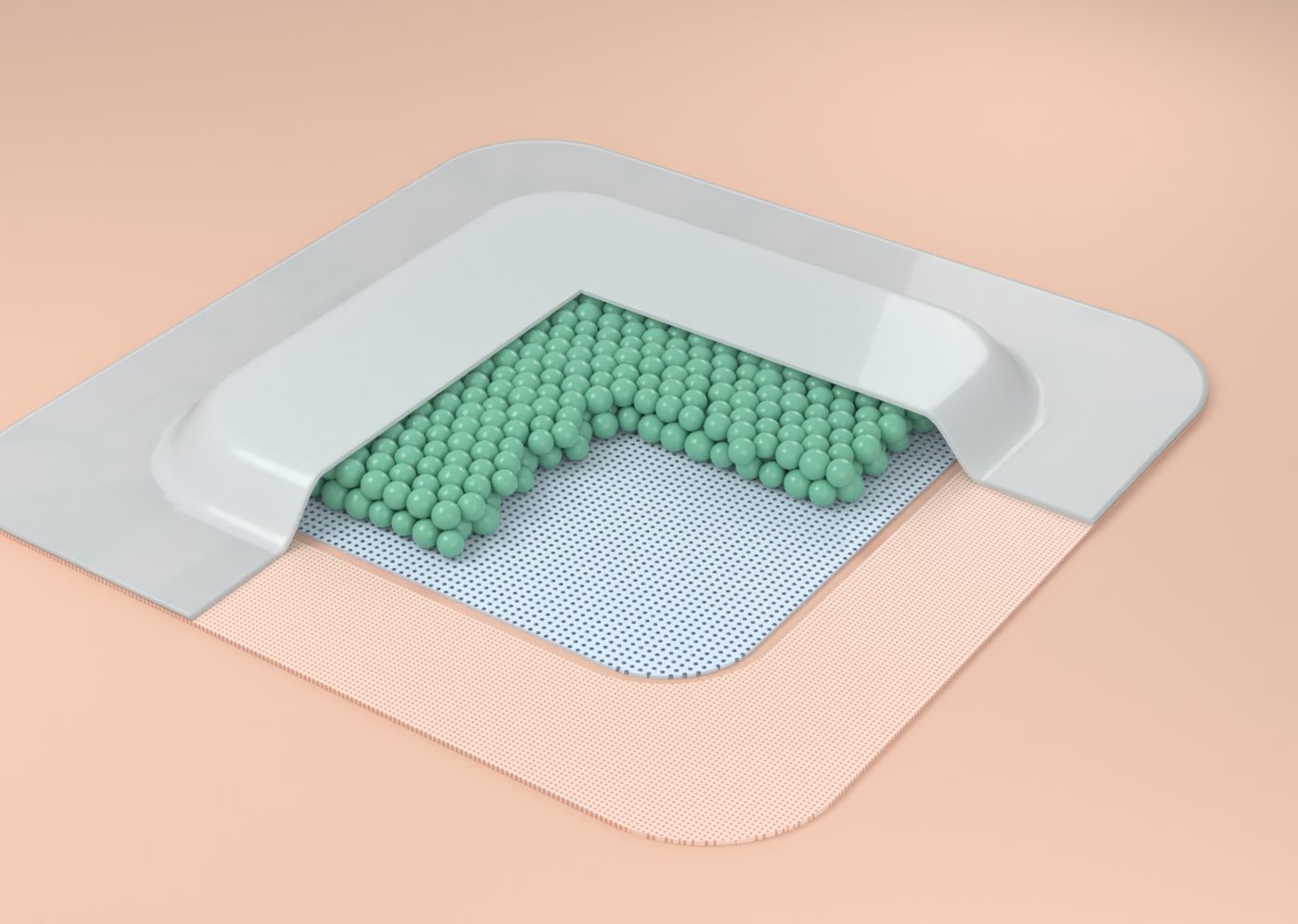
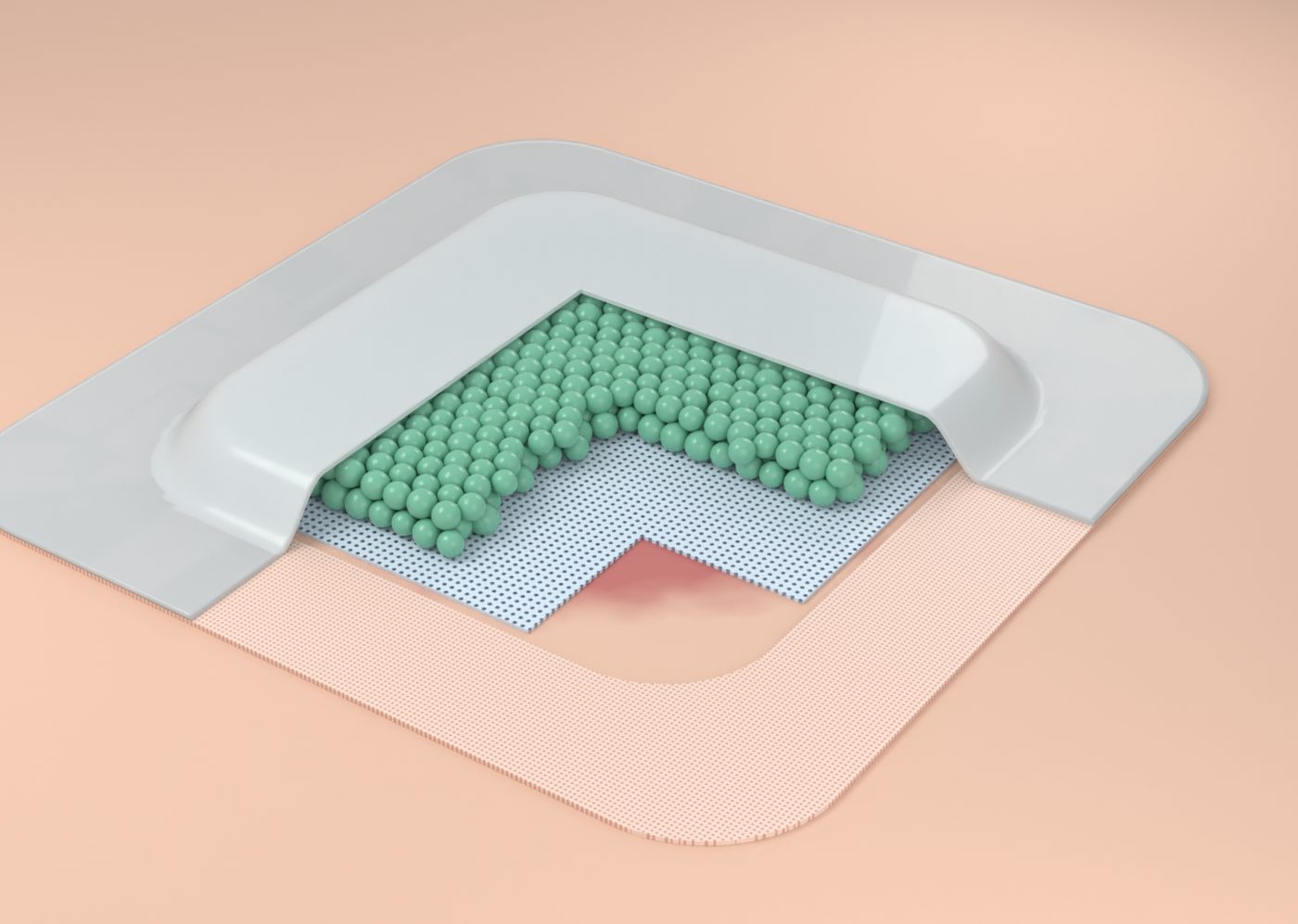
A dressing that soaks up the signals that stall healing

Chronic wounds get stuck in inflammation. Immunosponge is a dressing made of jammed hydrogel microparticles, designed to capture excess inflammatory cytokines and release the growth factors that drive repair.

Preclinical. Developed in the Macromolecular Engineering Laboratory at ETH Zurich.

Scroll to watch it work

Diabetic foot ulcers get stuck in inflammation

19–34%of people with diabetes develop a foot ulcer in their lifetime
~40%of healed ulcers recur within a year

In a healthy wound, inflammation peaks and then gives way to repair. In many chronic wounds it never switches off. Pro-inflammatory cytokines such as IL-1β, IL-6 and TNF-α stay high, and the signals that rebuild tissue stay low.

Figures: Armstrong, Boulton & Bus, N Engl J Med 2017;376:2367–75.

The sponge soaks up the excess

Packed into the dressing, our microgels draw in wound fluid. Affinity ligands on their surface bind inflammatory cytokines and hold them out of the wound, so the signal that keeps it inflamed starts to fall.

Regenerative signals get through

Other microgels release regenerative factors into the wound. With the inflammatory load reduced, the tissue can move on to rebuilding, starting with new blood vessels.

Back on the path to closure

The aim is a wound that leaves the inflammatory phase, fills in and closes. Immunosponge is preclinical: this is how the dressing is designed to work, and what our first in vivo studies will test.

  1. Inflamed
  2. Signals captured
  3. Vessels regrow
  4. Wound closes
Microgel Inflammatory cytokine Regenerative factor New blood vessel

Concept illustration of how the dressing is designed to work. Not to scale, not experimental data.

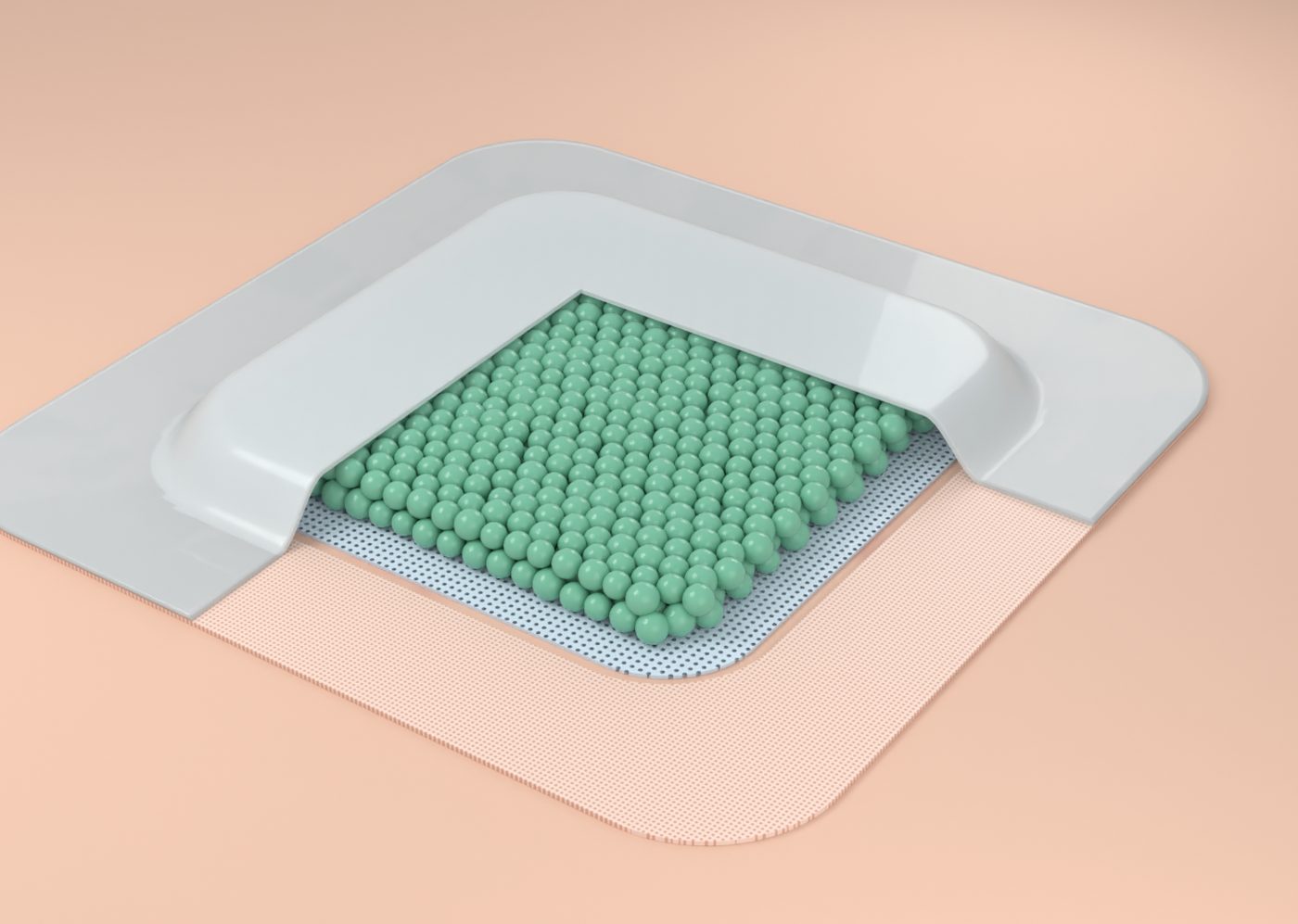
The dressing

A soft, bordered dressing with a layer of packed microgels, meant to be applied like the dressings wound-care teams already use. Drag the slider to look inside.

  1. 1Backing filmBreathable. Moisture vapour escapes, liquid stays in.
  2. 2Microgel layerPacked hydrogel microparticles that take up wound fluid, capture inflammatory signals and release regenerative ones.
  3. 3Contact layerSoft and perforated, so fluid passes through to the gels.
  4. 4Adhesive borderHolds the dressing on the intact skin around the wound.
  5. 5Wound bedThe contact layer sits directly on it.

First use: early diabetic foot ulcers (Wagner 1–2). Preclinical.
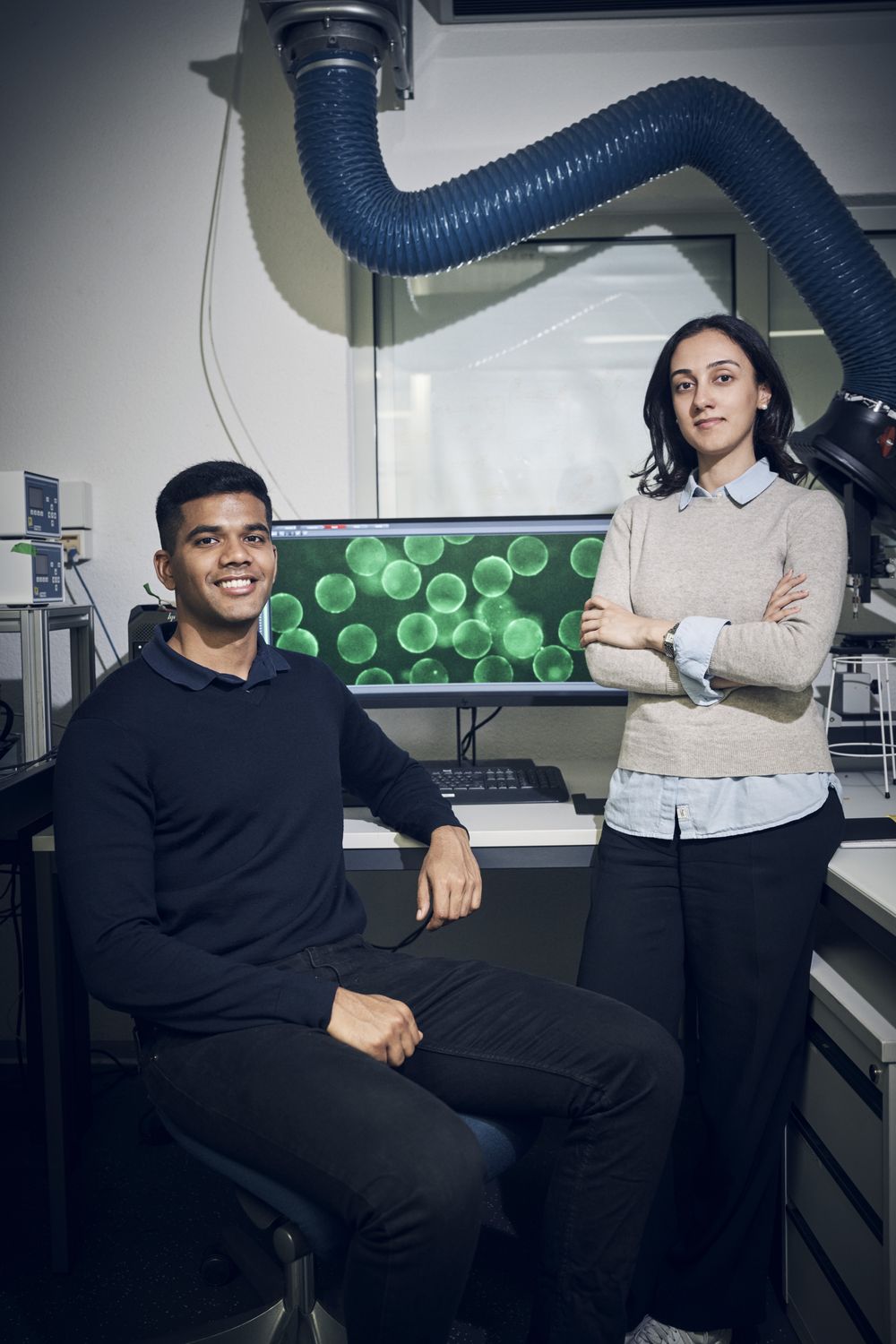
Apoorv Singh, seated, and Börte Emiroglu, standing, in the lab in front of a screen showing green fluorescent microgels
Apoorv Singh and Dr. Börte Emiroglu in the lab.

The people behind the sponge

A small team from ETH Zurich, working with clinicians and industry to turn a published material into a product. Select a photo to read more.

Apoorv Singh

Co-founder and CEO

Joined the Macromolecular Engineering Laboratory at ETH Zurich in 2023 to work on granular hydrogels for chronic wound healing, the research Immunosponge grew out of. Co-founded the company in 2025 and leads it, together with its technical development.

Studied materials science at EPFL, with an exchange year at Imperial College London, then at ETH Zurich with a focus on biomedical engineering. Did his master’s thesis at Stanford, bioprinting lymphatic vessels for cardiovascular organoids in the Skylar-Scott lab.

Inventor on two international patent applications: one for Immunosponge’s granular hydrogels, and one from his Stanford work on lymphatic vessels for 3D cardiac tissue. Held an SNSF BRIDGE Proof of Concept fellowship and is now an ETH Pioneer Fellow.

Dr. Börte Emiroglu

Co-founder and Technical Advisor

Developed the granular hydrogel platform during her PhD and postdoc in the Macromolecular Engineering Laboratory at ETH Zurich, and is first author of the 2024 study it is built on. Led the project as an ETH Pioneer Fellow from 2025 to 2026, taking it from the lab towards a product.

Now an Associate in Product and Pipeline Innovation at Flagship Pioneering in Cambridge, Massachusetts, after a summer there as a Venture Fellow. Stays with Immunosponge as technical advisor.

Selin Baysal

R&D Scientist

Did her master’s thesis with us in the Macromolecular Engineering Laboratory at ETH Zurich, on granular biomaterials as bioactive sponges for chronic wound healing, then came back to lead our research and development.

Studied health sciences and technology at ETH Zurich, with a master’s in medical technology and research stays in the Laboratory of Translational Nutrition Biology and the Laboratory for Orthopaedic Technology. Has also worked in hospital care, at Kantonsspital Baden and University Hospital Zurich. Outside the lab, she co-founded and co-runs thebookclub ETH.

Prof. Mark Tibbitt

Scientific co-founder

Associate Professor at ETH Zurich and head of the Macromolecular Engineering Laboratory, where the Immunosponge platform was developed. His group engineers polymer materials for medicine.

Trained as a chemical engineer, with a PhD from the University of Colorado Boulder in Kristi Anseth’s group and a postdoc in Robert Langer’s lab at MIT. Joined ETH Zurich in 2017. Holds a BA in Integrated Science and Mathematics from Northwestern University.

Dr. Céline Labouesse

Scientific co-founder

Senior Researcher in the Macromolecular Engineering Laboratory at ETH Zurich, working in mechanobiology and bioengineering: designing tailored environments for cells and engineered tissue. Co-author of the 2024 study the platform is built on.

A physicist by training, with an engineering degree from École Polytechnique, a master’s from ETH Zurich and a PhD in cellular biophysics from EPFL. Spent five years as a postdoctoral researcher at the Cambridge Stem Cell Institute, in Kevin Chalut’s physical biology group, before returning to ETH in 2020.

One platform, multiple formats

The same microgels can be packed into a wound dressing, formulated into skin care, or adapted to new formats where local inflammation matters.

Chronic wounds Lead programme

A medical dressing for diabetic foot ulcers, starting with early, uninfected ulcers.

Wound care

Dermo-cosmetics With an industry partner

Microgels as an ingredient for sensitive, reactive skin, developed and brought to market by a partner.

Skin care

Oral care and beyond Exploring

Dry, shelf-stable microgel formats for oral care and other areas. We are open to ideas from partners.

New formats

Built on published work

The platform comes out of research in Prof. Mark Tibbitt’s Macromolecular Engineering Laboratory at ETH Zurich.

  • Paper, 2024
    Granular biomaterials as bioactive sponges for the sequestration and release of signaling molecules Emiroglu, Singh et al. Advanced Healthcare Materials 13(25), e2400800. doi:10.1002/adhm.202400800
  • Patent
    International patent application WO 2025/247844 PCT application covering the granular immunomodulatory hydrogel platform. View on WIPO Patentscope
  • Paper, 2022
    Building block properties govern granular hydrogel mechanics through contact deformations Emiroglu et al. Science Advances 8(50), eadd8570. doi:10.1126/sciadv.add8570

Talk to us

Send us a message and we’ll reply by email.

CliniciansWe want to hear from wound-care teams about what a dressing like this needs to fit into practice.
Industry partnersWe license the platform for formats and indications outside our own pipeline.
InvestorsWe are happy to share our plans and data under NDA.

Or connect with Apoorv Singh, our CEO, on LinkedIn.

Enter your name.
Enter an email address we can reply to.
Write a short message.

We use your details only to reply to you. See our privacy notice.